.

.
The Living Life Series is dedicated to Lord Bo Tien (武天菩萨). The doctrine is in His image. The image is the doctrine. He who sees, understands and effects the doctrine sees and knows Him. He who does not see, know and effect the doctrine sees not and knows not the saint even if the saint or His image is beside him. The far may be near and the near may be far. Let the doctrine and the saint be part of our life. The lord saint in your life can be any heavenly saint of any religion, sect or school. The doctrine of truth is behind all and this is the Inner Truth that leads all (regardless of their religious affiliation or even if none) to inner peace and heaven on earth here and now and not just in the after life. The ideal worship and devotion is to know and effect the doctrine of God and the saints. The best gospel is the gospel of life. We learn from our life and the lives of others. The true temple is the world we live in. The sky is the roof of the temple and religions and sects are the pillars of the temple. All under Heaven are in the temple. Needless to say that all the saints we know are in this temple. Ji Gong Posat too is no exception. The whole wide world and web is the temple and must be regarded as a sacred place --- a temple for living and learning. It is more important that everyone that counts plays a role in this universal temple if due focus is to be given to the Mission of Heaven. Men must not be distracted by the agenda of men and end up serving the mission of man. That would be a far cry from the Mission of Heaven. We worship God and saints, not man however good that man may be. There should be no hero worshiping or idolizing of man whether he is a charismatic pastor, priest, monk, medium or lay leader. We don't even idol worship the image of any saint but reflect on what the image stands for. - the doctrine in the image. Omitofo 阿弥陀佛!.

Wednesday, March 13, 2013

How a true spiritual leader should be.

No 396 of Living Life Series 1


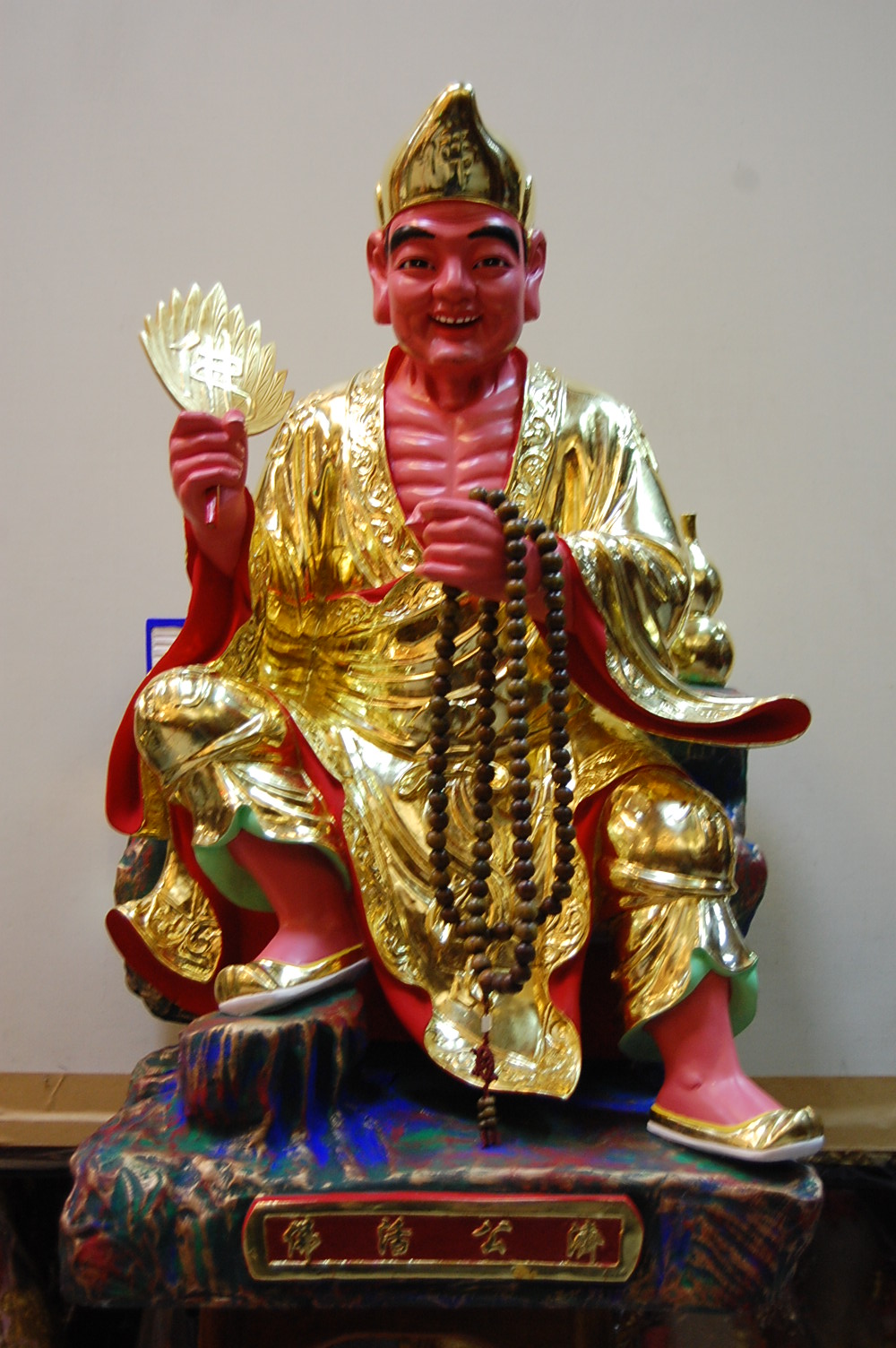
The above image projects the saintly deportment of Ji Gong. He is an accomplished saint and is a buddha in his own right though he is also a highly respected deity in the Taoist pantheon. 


But the life of Ji Gong as a man many centuries ago showed another perspective of someone who had no qualms in being himself and not trying to fit the expectations of the clergy in monastery. Whilst many monks would abide by the rules of conduct of a monk, he would not stick to them but be himself even if others thought that his behavior might fall short of expectations and be disgraceful. This result in his being ridiculed. 

But the truth is that those monks who were in leadership and took pains to show they are sticking to the few hundred rules of Vinaya (monks' rules) were not as forthright and truthful. What they did project of themselves were just to meet expectations and to enable them to hold on to their leadership status, so that they have free reign of what they do in monasteries. 

Like it or not, their hearts did not meet up to the holy image they projected. Behind this projected facade, there were perhaps even politics of cliques, commercialization and even misappropriation. The temple or place of worship became a place for reaping personal benefits and clinging to name and form. 

This was not good. Ji Gong showed the way by being his own self. He was always with the men on the streets, carefree, jovial and laughing, even frolicking and dancing, eating meat and drinking wine. But despite this image of being like the men in the streets and acting like a holy fool (as he was in robes of sorts), he was wise and sincere from the heart and that mattered more than what he ate or did. 

He was a blessing to others, helping the poor and down trodden, righting the wrong, and at same time benevolent to those who erred but willing to change. 

Thus though downgraded to menial chores and later expelled from monastery, he was confident of himself and of what he was doing. There was need to be himself but be right from the bottom of his heart. 

He did not join another monastery but roamed the streets in grey informal monk garment often torn and patchy, He carried a torn fan and a gourd. He wore a cap of sorts. He was often seen with the poor and beggarly. His fame grew and his exploits to help others won acclaim.There were numerous stories of miracles attributed to him. He overshadowed many of those monks at the monasteries who appeared holy and befitting of monks but only superficial and more skin deep and less heart driven in spirituality. 

There is a parallel of this in modern society. Mega churches and also temples have high profile society leaders who handles huge gullible congregations as well as large sums of money. They may be priests, monks or supposedly anointed clergy. Their often vibrant public image at the pulpit or shrine can be magnetizing, charismatic and they enjoy being idolized. 

But by contrast, their personal lives can be at odds and a far cry to this cultivated public image. This true saints would choose to avoid having. They pander to the weaknesses of society and cultivate the weaknesses and base needs of society to their advantage. Isn't this state of affairs similar to the monasteries and temples in China during the life of Ji Gong as a man by the name of Li Xiuyan? 

It is a wonder that the life of Ji Gong as man many centuries ago is an eye opener of how temples and churches can err when they emphasize on rules and norms. Wolves amongst men would come to the fore and take on sheep's clothing. They do appear to deliver as priests and monks. They project a saintly and 'holier than thou' image of themselves but lead double lives. Some are even corrupt and mislead, misappropriate and misguide others. Some are even involved in other misdeeds such as sexual misbehavior. 

Ji Gong showed the way of how spiritual leaders and true saints of men should be. What matters is the heart. Learn from Ji Gong on how a true spiritual leader should be. 

Omitofo 


Sunday, March 10, 2013

Ji Gong the beggars' god or god of wealth?

No 395 of Living Life Series 1
another contribution by the shadow of the golden fan


Ji Gong was born as Li Xiuyuan (李修元) and the only son of a respectable wealthy military advisor. His parents were without child and were told that they did not have descendant’s luck by a fengshui master. They were saddened by the misfortune of not having a child. They descided to seek the gods for help and visited temples to seek blessings. 

At a Buddhist temple, they entered the hall of the 500 Arahats. The image of Mahakasyapa fell off from the altar. Not long after that, Ji Kong was conceived, his mother believed that the baby in her womb was a gift from the Buddhas. The parents thought that the gods had blessed them and when Li Xiuyuan was born, they thus believed he was the reincarnation of Arahat Mahakasyapa. 

At the agen 18, Li Xiuyuan after demise of parents during war went to Hangzhou to the famous temple Ling Yin Temple so as to be a monk. He took on the monastic name of Dao Ji Chan Shi but more commonly known as Dao Ji. 

It was said that as he was from a wealthy family, he was used to eating meat and drinking wine. Thus he was unable to give this up. Adding to this, he was even queer and appeared crazy to some. He was not even accorded ceremonial monk robes and had to don informal grey garment of a monk. Often this would be torn and patched up in many areas. 

But whatever misgivings others had for him, he had a good heart and all were impressed by his kindness and generosity. The temple being Chan Zen Buddhists strictly prohibited eating of meat and drinking of wine more so by monks and they had to expel him from the temple. 

After being expelled from his monastic life, Dao Ji or Ji Gong did not bother to search for another monastery or temple. Though not recognised as a monk by the monastery, he was confident of himself and just roamed the streets like a pauper with no house or temple. He was often thought off as a beggar and as a monk as well because he was still in monk’s robes, albeit the informal grey garments of a monk. 


He did continue in his oddities but he was always kind and compassionate. But though he looked poor and like a beggar, somehow he never had to beg for money. Probably, he had his inheritance to back him up but this is mere conjecture or speculation as there was no historical record of this. Even if true that he had retained his wealth, how on earth did he manage his wealth while roaming the streets and the countryside? God knows...

He practiced from the heart and was compassionate and emphatic. Though unaccepted by the monastic life, by cultivating from the heart, he reached perfection of a saint which he had in fact been cultivating even in past lives. This enabled him to help the poor, unfortunate and downtrodden but he did so in rather strange unassuming ways with no outward show or display of saintly airs and presence. In fact, this soon became another of the oddities.

He would often frequent the poor and beggars. He would listen to them, would joke and laugh with them and then say a prayer. This was like a ritual. After every such encounter, he would fan them with his magical fan as though to bless them. Soon after, good fortune would invariably befall them. 

He thus became well known and earned him the title Ji Gong Huoto - Living Buddha Ji Gong. Ji is derived from his monk name Dao Ji. Gong is a term of respect for an elder and nobility. Huoto means living Buddha. 

Thus it is no surprise that many consider him as the beggars’ deity or god. Many too consider him as the Ji Gong the god of wealth for he brings fortune to many. There are gold pendants in Taiwan with him holding a gold ingot. He is well regarded in Taiwan as a god of wealth.


With the coming of old age, Ji Gong could no longer roam freely and he resided in another monastery where he passed away on the 14th day of the 5th Lunar month from measles. Right after his death, Taoists adopted him as their deity, and stories abound to this day that he continuously manifest his compassionate and magical powers to everyone who keeps his image and go to him. Later Buddhists too consider him as a buddha. 


He cares for all, more so the poor and the unfortunate and they are very comfortable with him as he is ever in his grey patchy robes and cap. He prefers to be on the floor than on seats of nobility. He will right the wrong that befalls men especially ordinary unfortunate folks. Some regard him as a Robin Hood of sorts. But he has the heart for those who have erred and is ever benevolent to those who amend their ways. He is thus more than a Robin Hood. 

He brings fortune not just in cash but in kind and spirit of life into the lives of men. No wonder, his followers regarded him as the god of wealth in their lives, not just worldly wealth but in wealth of spirit and soul. He believes that what is important is what goes through the heart and not what goes through the gut or what one does outwardly. He is exemplary to this day. He ate meat and drink wine and these do not stop him from being well regarded as a saint, deity and buddha.  

He helps to balance the life of man so that man can reap blessings in life both worldly and spiritual. This has to do with the holistic wholesome cultivation of yin and yang that leads to divine peace and eventual enlightenment. He  is the harbinger of wealth in life that is more than mere worldly mundane wealth. He enables wholesome divine wealth that money cannot buy. He is no ordinary run of the mill god of wealth. He is the Living Buddha. 


His image is usually pictured as a monk in grey rugged clothing, holding a bottle of wine usually wu chia pi and a ‘magical’ fan. He always had a smiling face. All should pray to him and be blessed by him through his magic fan often referred to as the golden fan. 


Saturday, March 9, 2013

A Rock of Ji Gong

No 394 of Living Life Series 1


In May 2009 in Ji Gong's native land, Celestial Platform (天台) of Zhejiang Province (浙江), China,  a tourist discovered that a part of the hill somehow resembled the image of Ji Gong.


Ji Gong was born as Li Xiuyuan. He lived from 1130 to 1207. He became a monk at age of 18 and then was named Daoji. But he was very different from other traditional monks as he drank wine and ate meat and was jovial, humorous, frank and appeared crazy. 


Behind this external facade, he was serious and intent to help ordinary people. Many in his time failed to see the saint in him while he was with the monastery. 


His fame and exploits to help the many have grown over the centuries. 

He lives among men and even prefers the floor to be with men - more so the ordinary men. 

To this day, many find it difficult to conceive that someone who drinks and eats meat can be a saint - a living buddha. He demonstrated that what matters is the heart and not what goes through the gut.

His life demonstrates that ordinary men can be enlightened and that what matters is the heart and not what goes through the gut.  


Sunday, March 3, 2013

Affinity with saints like Ji Gong is the wish of God

No 393 of Living Life Series 1


The Miracles of Ji Gong are many and plentiful. But one historical incident deserves mention and reflection.

During his lifetime as man, Ji Gong predicted there would be a peak flying from afar at the village in front of Linyin Temple. He advised the villagers to evacuate. But no one believed in him. They thought he was playing tricks. This made monk Ji Gong worried. He then conceived a way to lure the villagers away in quick time. He rushed into a wedding ceremony and took the bride away. This infuriated the villagers and all ran after him. Suddenly a storm with earthquake resulted in earth movement that resulted in a peak in the front of Lingyin Temple. The villagers then realized that Ji Gong had saved them. This peak came to be known as 'Fei Lai Feng' - the Peak Flown From Afar. 


One variant of the story had it that one little girl was staggering and trailing behind  the villagers running after Ji Gong and a boulder was hurtling towards her. Ji Gong directed his magical palm at the boulder and prevented it from hurting the girl. It is said that an imprint of the hand can be found at the base of the boulder that formed the peak.


Ji Gong continues to create wonders for others but perhaps, they must have the affinity to come his way. He would have wanted to reach out to everyone but this will always remain an ideal and alas there is always the element of affinity.  Only those whose lives are fortunate enough to somehow have affinity with him will have the chance. Call this karma or fate or what you want. 


The miracle of the villagers saved in the event of Fei Lai Feng during his lifetime as man at Hangchow China is an example of fate and affinity. Though the villagers did not believe in monk Ji Gong, somehow they lived at the same place and time as monk Ji Gong. Perhaps, this was because they had done some good in previous lives and were connected by fate to be with Ji Gong and to have affinity with him and be saved. 


There were of course many other similar events or incidents but why people involved were not as fortunate deserve more reflection.  Is God that unkind or why are saints like Ji Gong bias?  


The only answer is that of affinity and that there is need for God to have more saints and saviors through more religions and sects and even outside religion to reach out to the many. One religion or sect will not be good enough. 


The miracle of the villagers saved  in the event of Fei Lai Feng needs to be repeated many times over but this depends on how God can succeed in getting more saints and saviors to go out to the many. There is no time to waste and men the world over must facilitate and not obstruct through ignorance and bigotry the goodwill of God and obstruct the growth of more affinity of men with saints. 


Ji Gong is one of the many saints. Ji Gong had and continues to help the many but there are many more that need the reach of God through more saints of God. 


The miracle of the villagers saved  in the event of Fei Lai Feng and many other miracles won the hearts of the people who had the affinity to live and be saved. There will not be only one or two saviors or 'Ji Gong's but God willing, there will be many more. 


God will want to foster much more the affinity of men with saints like Ji Gong.


Thursday, February 28, 2013

Be like Ji Gong and live with glee

No 392 of Living Life Series 1


The joy of the one who is enlightened is beautiful and perfect. His joy is not tied down to wealth or status. He does not need to put on airs. His body language mirrors the joy in him. His very presence is soothing and blessing to others. 


Ji Gong The Living Buddha is such a being. But he goes further to show you that he can be carefree and forgoes status and trappings of a saint. He behaves like a beggar or vagrant, jumps, hops, sways, sings and dance around, even drinking and eating meat unabashed. 


For he is free  and a master of life, living life way beyond the ails of conditionality of yin and yang. He demonstrates that one can be with society and continues to be, even drinking, eating and merry making. But one must do so when free and pure at heart. This matters more than what one does and eats. 

We can dance with every step of life if we are pure at heart and liberated from conditionality. Then we be like immortal Ji Gong who to this day still lives and hovers amongst men. 

Ji Gong manifests his joy of sainthood by frolicking amongst men on streets and floors of men. We may say this is his way to show us the dance of joy and man too can be like him without giving up the worldly ways. 

What is needed is to be pure and free and yet be man but a free man, free from stifling rules and expectations of the many, free from attachments of family and society. Denial or running away from family or society is not the answer and does not bode well for the man on the run from life. 

Ji Gong left the monastery in his life as man to be with the world of men and nurtured the universal temple in the whole world of men. He neither deny self nor cling on to self. For sure,there is need to value self as well.

Be what you are and value self. If you value self, you set yourself free to be with wider life and society. You should not want to be seen to be different. You should want others to know that you are like them and not beyond the world. They too can be pure at heart and be buddha like Ji Gong. 

No need to stop being what you are. No need to stop what you do or eat. There is only need to have the heart to be pure, be at peace and free even in world of conditionality of ebbs and flows. 

Let us be pure at heart and live life free and with glee. Be like Ji Gong and live with glee. 


Ji Gong carving in Linyin Temple

The world is his home and the people his kin. Ji Gong roams the world of men to bring to them the life of glee which is reachable by all. 

It is however best that men must go beyond home and fame which can often tie men in knots and chains, for worldly wealth and status though good is not good enough for life of glee. Many are rich but poor in spirit and the heart. There are those rich in spirit and heart but not as endowed worldly wise. They are better off in the end.

Man must be mindful to look after home, task and job at hand. Otherwise, how can he look after the many in society out there. The little bit man can do, best for man to do it well so that one day he can look after the many out there. Man must start with himself and the home. 

Man needs to cultivate pureness from the heart and nurtures the life of glee and nurtures the same at home base with kith and kin. Only when man can live at home and nurture the life of glee in all at home, then can they spread the glee to those beyond (the home). 

Learn to be a little immortal before graduating to become a saint of sorts and be able to bring glee to more. Then Ji Gong will be proud of him for he has become a bit more like Ji Gong to live life with glee and help others to do so as well. 

Omitofo


Wednesday, February 27, 2013

Taming the dragon

No 391 of Living Life Series 1


One of the many legends has it that in his past lives, while cultivating in the Buddha’s teaching, Ji Gong was said to be a reincarnate of arahat with magic powers. He chose to be a holy fool who portrayed crazy eccentricity to provide a cover for his real identity as the incarnate of the Taming Dragon Arahat (Xiang Long Luo Han, 降龙罗汉) -- one of the eighteen legendary arahats. Thus he could complete the task set out by Amitabha Buddha for him to find the escaped Da Peng Bird (大鹏鸟).


There is a kingdom in ancient India where the people incited by a demon went on a rampage against the monasteries and stole the Buddhist scriptures. The undersea king flooded the kingdom and took over the scriptures and put them in his palace. Nantimitolo subdued the dragon guards and restored the scriptures back to earth. He is thus known as the Taming Dragon Arahat.

To recapitulate, legend has it that Ji Gong is the incarnate of the Dragon Taming Arahat who came down as man to tame the budding dragon in man. The dragon is the yin and yang - the soft and hard aspects, the worldly contingencies (like health and sickness, loss and gain, growth and decay) that shape and characterize nature, be it in life, mother Earth or beyond.

With mastery over yin and yang, Ji Gong rides the dragon and brings welcome relief and reprieve to all by leveling the  playing fields of life. Life plays out the ups and downs that can be trying. But do have hope in God above to level up and level down the humps and troughs of your life on Earth.

Ji Gong is here for you, to help and show you the way, just as Amitabha had for him the incarnate of the legendary Taming Dragon Arahat. Amen. That is so and that we must know. Thanks to God and Heaven above for Taming Dragon Arahat in Ji Gong the Living Buddha.

Ji Gong is there for one and all. You don't have to be of any sect or religion or any temple or church to be entitled to his blessings. All in any religion or even those without religion can come to him. He is the dragon tamer and will help and show you how to tame and balance the dragon of yin and yang in your life. Thus he is often portrayed riding the dragon as above.

Let us ride the dragon of life to more of peace in life. Go for more of life if we can but ever be prepared to make do with less. Be with life and not run away from life. We need to take on and ride the dragon that is life. We need to stay atop of life and not falter.

We need to tame the dragon to have more and not less in life. Let not life swing,  swirl and fling us around. We need to tame and ride the dragon of yin and yang. so that we can be around for more of peace amid the sound and flury that abound.

Let us tame the dragon that is life and ride the dragon peacefully to more of life. Ji Gong will bless us for sure. He is the Dragon Taming Arahat.  Omitofo and peace be, peace be to one and all.


Tuesday, February 26, 2013

The quest of the golden fan

No 390 of Living Life Series 1


The golden fan of Ji Gong seeks to fan down the problems of man which are due to ignorance and unfavorable circumstances in life of man. 

In place, Ji Gong fans in goodness to harmonize life conditions so that issues are not blown up but fizzle out to make path of life more even and pleasant. 

Life will then be more experiential than tormenting and life will ever be better ground for learning and cultivation of Tao, the Way. That is the quest of the golden fan. 

Man must have the right milieu to grow optimally and learn to have the peace of God here and now and man is blessed to have saints like Ji Gong to ease the living pains and grow the gains in life. 

Balancing the dualities in the world, both within and without the self is tough for the wayfarer in any man. If in need, do seek divine help. Ji Gong the Living Buddha has vowed to stay with men on Earth and even be on the floor with men. 

You may say that this is manifest of the quest of the golden fan. Omitofo and peace be to all. 

Man must know the dualities in life. Call it yin and yang if you may. Life is eventful and no bed of roses. Even a bed of roses too have thorns. Heaven knows this and feels for men. 

Issues and problems in life will always be and are good for learning but the issues in life of man are many and plentiful. Without divine providence, man on his own may have difficulty to take them on.  

Saints like Ji Gong are there for the good and compassion of the many so that it is easier for man to be atop the yin and yang of life. Many an infant need help to walk. Man too needs help to walk his life. 

The golden fan of Ji Gong evens out ground of life so that the path of life is less bumpy and not so eventful. Man can then walk better down the road of life. Man needs divine compassion but as the saying goes that God helps those who help themselves, man must still walk the road of life. 

Seek out Ji Gong to bless you with the golden fan. A timely help here and there and now and then makes a great difference. That way, you will fall less and walk more in life. Even if you fall, he will be there to pick you up again. 

Omitofo and peace be once again to one and all.


Monday, February 25, 2013

Ji Gong continues to touch more lives

No 389 of Living Life Series 1


The legends of Ji Gong are varied and many. 


For centuries, Ji Gong is widely known among the civilians in Hangzhou. Ji Gong is depicted as wearing the tethered cap and dons a torn cassock and holds a broken fan. He did not look like the typical monk. 


Ji Gong became a monk at Linyin Temple at the age of 18. He was never a conformist and never abided by dogmas, regulations and standard principles. He liked drinking and eating meat. 


Legend has it that after he was asked to leave Linyin Temple, he turned to the Jingci Temple as an amanuensis monk. 


On one occasion, fire destroyed the main hall of Jingci Temple. The abbot turned to him for gathering wood for restoring that hall. But instead, he slept for three days from wine drinking. He miraculously exclaimed:"the wood is here, take it from the well." The wood really flew out from the well of temple until there was enough for reconstruction of the hall. To this day, there is a Shenmu Well in Jingci Temple.


One day, Ji Gong predicted there would be a catastrophe from earthquake that would result in a hill taking form in the front of Linyin Temple. For the sake of saving the villagers ,he evacuated the villagers and saved them from disaster. The detail story  is as follows.


During his lifetime as man, Ji Gong predicted there would be a peak flying from afar at the village in front of Linyin Temple. He advised the villagers to evacuate. But no one believed in him. They thought he was playing tricks. This made monk Ji Gong worried. He then conceived  a way to lure the villagers away in quick time. He rushed into a wedding ceremony and took the bride away. This infuriated the villagers and all ran after him. Suddenly a storm with earthquake resulted in earth movement that resulted in a peak in the front of Lingyin Temple. The villagers then realized that Ji Gong had saved them. This peak came to be known as 'Fei Lai Feng' - the Peak Flown From Afar.


One variant of the story had it that one little girl was staggering behind and trailing behind the villagers running after Ji Gong and a boulder was hurtling towards her. Ji Gong directed his magical palm at the boulder and prevented it from hurting the girl. It is said that an imprint of the hand can be found at the base of the boulder that formed the peak.


Undoubtedly, there are many more stories and folklores from Hangzhou. In the past 2000 years or more, the stories were passed down from one generation to another. The narratives were closely connected with ordinary people's daily lives. 


What is more striking is that Ji Gong in the last 2000 odd years and more continues to be with people not just at Hangchow but through his manifestations and through his human intermediaries in many countries such as South East Asia, Taiwan, Japan, India and Australia. 


He continues to speak through intermediaries and touch peoples' lives. No issue is too trifle for him to attend to. Seek him out and he will be there for you. There is no barter or conditions. He only wants to help and he never sets preconditions that you must be his disciple or believe in a sect, religion or be member of a temple. 


You can be of any race, of any belief, religion or of any culture. So long as you have an issue for him to attend to, he will be there for you. All he wants is for you to suffer less, to have a better life and to be good. Whether you can be spiritual or not is not his immediate concern. How he can make a difference in your life is all that matters. He never proselytize or politicize - no expectations of any conditions. 


All he wants is to make the difference to your life. The numerous good works of Ji Gong are more than legend. He is accepted in the pantheon of Taoism and Buddhism. He is both a buddha and a deity but he never said that you must be a Buddhist or Taoist to come to him and to seek his help and guidance. 


He has the heart to help and that is what counts and that is why many are attracted to him and yet remain as members of their respective culture and religion. You never need to renounce your religion or sect to benefit from his compassion. His compassion knows no boundaries. 


You can even be a criminal or wrong doer but if you need help, he will be there for you. Of course, he will try to help you to make good in life. 


That is Ji Gong and many have asked him for wins in lottery, for a good job, for health issues and for social problems. There was never any strings attached. You don't have to believe in him or be a Buddhist or Taoist for you to be eligible to seek his compassion. 


But invariably after he touched your life, you would and will be a different person - a better person and an asset to others regardless of religion, sect or affiliation. The stories of Ji Gong are unfolding every day and continue to do so. The numerous good works of Ji Gong are more than legends. 


Ji Gong will continue to touch more lives. He lives on with man and in man. He is a living saint - a living Buddha. Thus he is Ji Gong Huo Fo. 


Sunday, February 24, 2013

Cultivate the Ji Gong in us

No 388 of Living Life Series 1


JI GONG THE LIVING BUDDHA


There is in everyone of us the true nature of life. We are what we are and many want to be what they are not. We need to accept what we are before we can be what we are not. 

If we detest or are not comfortable with what we are, it would be a denial of life  and self. If we go for what we are not and find we are way off the mark for now, we will have poor esteem of ourselves and have no comfort in life we are having now. 

Many seek the truth of ancient wisdom, yet the profound truth is simple but difficult to perceive. The reality is to accept what we are and to know ourselves. If we can do that and be at peace with our life, be it our job, our family, our resources, our attributes, our strengths and limitations, we have seen through life and will be at peace. Only then could we have the joy to move on and to cultivate more in life that will yield more satisfaction in life.

Do not try to be what we are not, more so in spiritual life and do not try to ape the saints and the holy ones. Ji Gong in his life time as man did not do so many centuries ago. He was desolate after the family tragedy and entered the monastery but the trappings and rules of monastic life. 

Many put on a show and conform but ended up bound by ropes and chains of conformity. Their mind or spirit is chained and bound. They end up far from the end which is divine peace and mistake the means as the ends. The rules and dogmas of institutional religiosity laid down be men end up tying them down with the laid down norms of society. Men end up pandering to the expectations of men and not God and Heaven, effectively worshiping men instead of God and Heaven. 

Ji Gong certainly did not and was excommunicated from the monastery for his care free ways, for his drinking and meat eating, for his frolicking with ordinary men,  beggars and monkeys. He was what a monk in his days should not be but whilst his actions were at odds with expectations of the religious clergy then, he was not lost to Divinity and enlightenment. 


JI GONG 

He believed in being what he was and cultivated purity and peace of the spirit. What is important is what goes through the heart and not what goes through the gut. He succeeded in divine peace and sainthood and now is seated with God and saints but there again, he prefers to be with men. 

We should be like him and cultivate our heart and not our body. We should not cultivate the expectations of men and end up tied and bound by societal norms. 


Ji Gong 

There is the Ji Gong in us. We should never mind if we cannot be monk, pastor or priest. We should never mind if we cannot chant the holy scriptures and never mind if we cannot lead the flock in a church or temple and pander to the expectations and fancies of men. We should be what we are and not have guilt, but cultivate the heart to be pure and at peace. It is not what we do, what we act or what we say and can show outwardly that count. It is how we can truly be and it is the heart that matters. 


JI GONG THE LIVING BUDDHA


Cultivate the Ji Gong in us by taking a leaf or two from the life and ways of Ji Gong. Be what you are and not be what others are or what others expect of you. Cultivate the heart and not what you want others to think of you. Be yourself and be pure. Don't end up trying to be what others expect of you and be in chains and far from being at peace and far from being pure and Godly. 

Jesus of Nazareth too did not behave as though he is God but he is amongst men and every bit like any other men though extra-ordinary. He displayed his Godliness not by being a king or nobility of men such as the nobility of the Roman empire. He is rich in God but not rich in the ways of men during his time. He was humble and pure at heart, easily acceptable to the masses and ordinary folks of his time. He even allowed himself to be crucified. He never asked to be portrayed as all powerful, awesome and to be feared. He would never ask or boast to be enthroned beside God. 

Modern men remembers him as the Godly one who was wronged by being crucified like a murderer. Jesus like Ji Gong are alike in being pure at heart and not keeping to the norms expected of priests, saints and sons of Heaven. Men may cast them in the image of nobles and kings even to this day but this is not what they expect and what they would want us to remember them by. They are saviors of men by being with men and very much like men which makes affinity with them not an issue. 

Lord Bo Tien too did say in 1975 that he descend not to display his saintly prowess or to exhibit his divine might. In one of the last messages in the early 80s, he said that he is no general or martial of Heaven but the image of him as a general is meant to convey his teachings. Truth or teaching is in his image and his image is his teaching. 


 LORD BO TIEN


Men who are the priests of saints like Jesus, Ji Gong or any deity like Lord Bo Tien however likes to paint them as all powerful awesome and to be feared. In turn their priests like to command awe in their congregation and deck themselves in robes of nobility like those nobles of the Roman Empire or the Emperor's Court in  ancient China. This is not desirable but merely reflects the echoes of men and a disastrous misrepresentation of the humble and pure Godliness of saints like Jesus, Bo Tien and Ji Gong.

We must all cultivate the saint or Ji Gong in ourselves and yet be ordinary like other men and at same time extraordinary in being pure at heart and not try to live up to the unwholesome worldly expectations and fancies of the men of society. 

Renunciation is that of the mind and must come from the heart and not just a show of the body and outward actions. It is renunciation of mental roots of ill-will, greed and false views. It is not and never will be a renunciation of who we are or how we have been living out life - our daily life. It is the embracing of life and not rejection of self but the purification of being that must be sincere, complete and whole. For this it is the heart that matters. 

Even Gautama Buddha in his lifetime on earth lived by the heart. It is the heart that matters and not what is eaten. People gave him alms and this included meat. He ate what was offered and this did not meant that he wanted animals to be slaughtered to provide meat for food. Of what use is vegetarianism if there is malice and no love for human life, let alone love for animals. It is the heart that matters. 

Ji Gong had led the way and showed us how to be pure at heart and not just stick to norms and expectations. We need to cultivate the Ji Gong in our heart.Then issues big and small will be no issue. For the wise one will neither run from life nor be slave or victim to the incessant wants in life. He will know his limits and set his markers in life so as to do well in life and yet be able to reach and go for the divine peace others find so elusive. Then there is heaven and peace even here and now and no need to wait for afterlife or yearn for yesteryear. 


Omitofo.


JI GONG 


Sunday, February 17, 2013

The Rich Man and Lazarus

No 387 of Living Life Series 1


The rich man may think that he is near to paradise and providence and that he is close to God and saints. The poor may think that they are in hell on earth and neglected by providence. The truth is that what is important is what goes through the heart and not what one can have or get, not even what goes through the gut. The more one has the more likely one is so distracted and too preoccupied to have time and resources to cultivate the heart towards Godliness - the purity of mind and heart. 

The far may be near and the near may be far. This did Lord Bo Tien say. Thus those who are well endowed be it in body, wealth, politics or in religious trappings such as a concrete temple or crystal church may well be at serious disadvantage compared to those who have little and are not endowed. One may be rich in standing in the eyes of men as birds of feather flock together and fools think alike but the one who is alone may well be of better standing in eyes of God and saints. This echoes what the Christian Bible says in Luke 16:19 - 31.


Luke 16:19-31 New International Version (NIV) 

19 “There was a rich man who was dressed in purple and fine linen and lived in luxury every day. 20 At his gate was laid a beggar named Lazarus, covered with sores 21 and longing to eat what fell from the rich man’s table. Even the dogs came and licked his sores. 

22 “The time came when the beggar died and the angels carried him to Abraham’s side. The rich man also died and was buried. 23 In Hades, where he was in torment, he looked up and saw Abraham far away, with Lazarus by his side. 24 So he called to him, ‘Father Abraham, have pity on me and send Lazarus to dip the tip of his finger in water and cool my tongue, because I am in agony in this fire.’ 

25 “But Abraham replied, ‘Son, remember that in your lifetime you received your good things, while Lazarus received bad things, but now he is comforted here and you are in agony. 26 And besides all this, between us and you a great chasm has been set in place, so that those who want to go from here to you cannot, nor can anyone cross over from there to us.’ 

27 “He answered, ‘Then I beg you, father, send Lazarus to my family, 28 for I have five brothers. Let him warn them, so that they will not also come to this place of torment.’ 

29 “Abraham replied, ‘They have Moses and the Prophets; let them listen to them.’ 

30 “‘No, father Abraham,’ he said, ‘but if someone from the dead goes to them, they will repent.’ 

31 “He said to him, ‘If they do not listen to Moses and the Prophets, they will not be convinced even if someone rises from the dead.”